Species: Dogs & Cats2 dose protocols2 dosage forms
This page is a calculation and educational reference for veterinarians and veterinary students. It does not replace examination, culture and susceptibility testing, clinical judgment, or the attending veterinarian's final decision.
Reserve-drug dose calculation only: 5 mg/kg as the imipenem component · IV · every 6–8 hSource: Merck Veterinary Manual 2025 / ISCAID 2019
Spectrum of activity
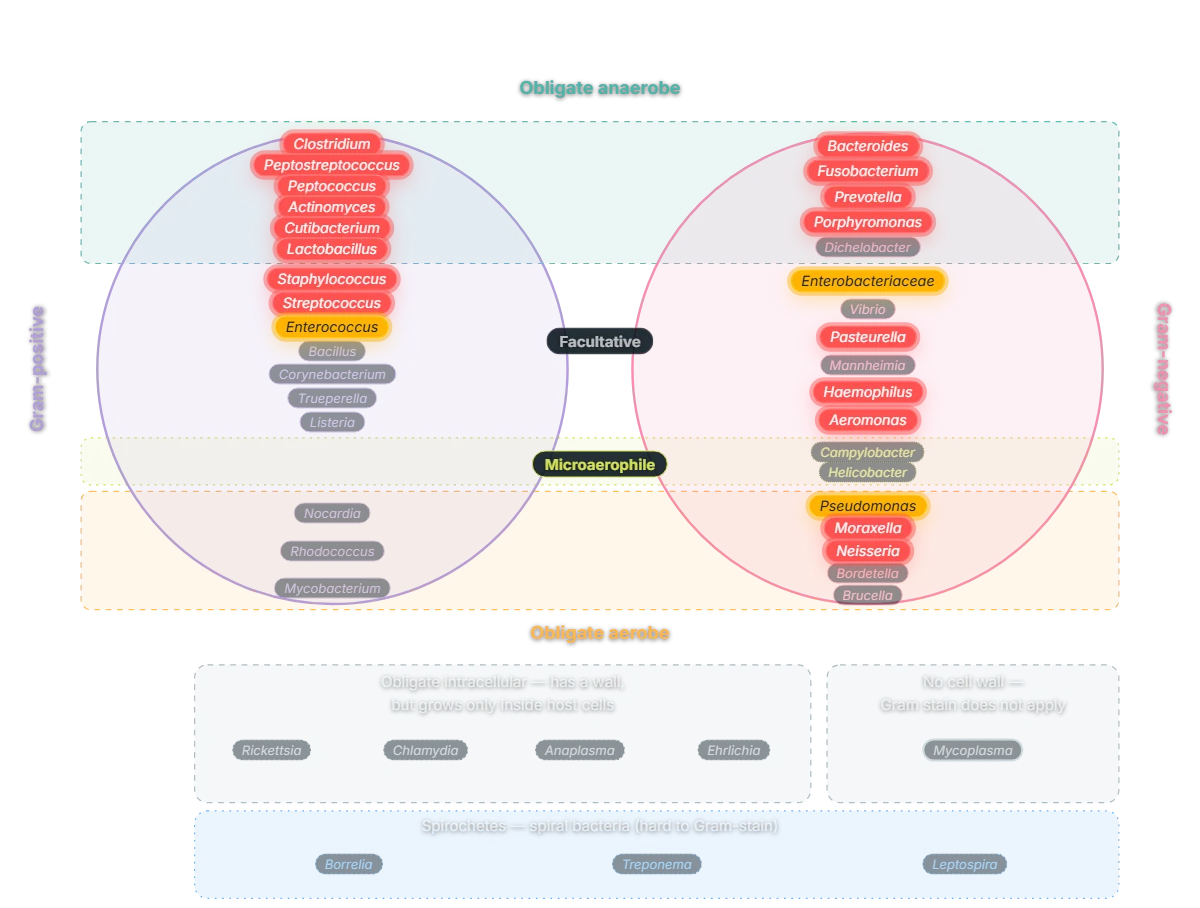
A very broad-spectrum, bactericidal carbapenem that is stable to many beta-lactamases, including many ESBLs. It is active against methicillin-susceptible staphylococci, streptococci, some susceptible Enterococcus faecalis, many Enterobacterales and anaerobes, including Bacteroides fragilis. Activity against Pseudomonas aeruginosa and Enterobacterales must be confirmed by susceptibility testing. It is unreliable against Enterococcus faecium, methicillin-resistant staphylococci (MRSA/MRSP), Stenotrophomonas maltophilia, carbapenemase-producing organisms, cell-wall-free bacteria and intracellular pathogens. Its breadth is not a reason for empiric use.
5 mg/kg as the imipenem component · IV · every 6–8 h
Clinical note: Use only for a severe infection documented by culture and susceptibility testing when no effective lower-tier option remains. Site of infection, source control, MIC and the patient's response determine the final regimen and duration.
Dogs & CatsSource: ISCAID 2019 / Barker 2003
5 mg/kg as the imipenem component · IM · every 6–8 h
Clinical note: IM use is extra-label and requires a product whose prescribing information permits IM preparation and administration. This route does not remove the need for culture and susceptibility testing.
Dosage forms
Imipenem/cilastatin vial 250+250 mg
Imipenem/cilastatin vial 500+500 mg
Safety and clinical notes
⛔ Human-reserve carbapenem: do not use empirically. Consider it only for a severe, documented multidrug-resistant infection after culture and susceptibility testing, preferably with specialist or microbiology input; narrow therapy as soon as results permit.
The dose is calculated from the imipenem component. Cilastatin is supplied 1:1 to prevent renal degradation of imipenem and must not be omitted or substituted independently.
Review the regimen carefully in renal impairment, seizure disorders, epilepsy, head trauma or other CNS disease. Rapid IV administration may increase seizure risk.
Avoid concomitant valproate/valproic acid: carbapenems can markedly reduce valproate concentrations and compromise seizure control.
Reconstitute the vial with 10 mL as directed, then dilute further for IV infusion; the reconstituted stock is not for direct IV injection. Doses up to 500 mg are generally infused over 20–30 minutes and larger doses over 40–60 minutes.
Do not mix with an aminoglycoside or another antibiotic in the same syringe, bag or line. Monitor for beta-lactam hypersensitivity and gastrointestinal, haematological, hepatic or injection-site reactions.