This page is a calculation and educational reference for veterinarians and veterinary students. It does not replace examination, culture and susceptibility testing, clinical judgment, or the attending veterinarian's final decision.
Limited formulary reference for a reserve drug: dog 30 mg/kg SC q12h; cat 30 mg/kg IV q8hSource: Merck Veterinary Manual 2025 (formulary reference)
Spectrum of activity
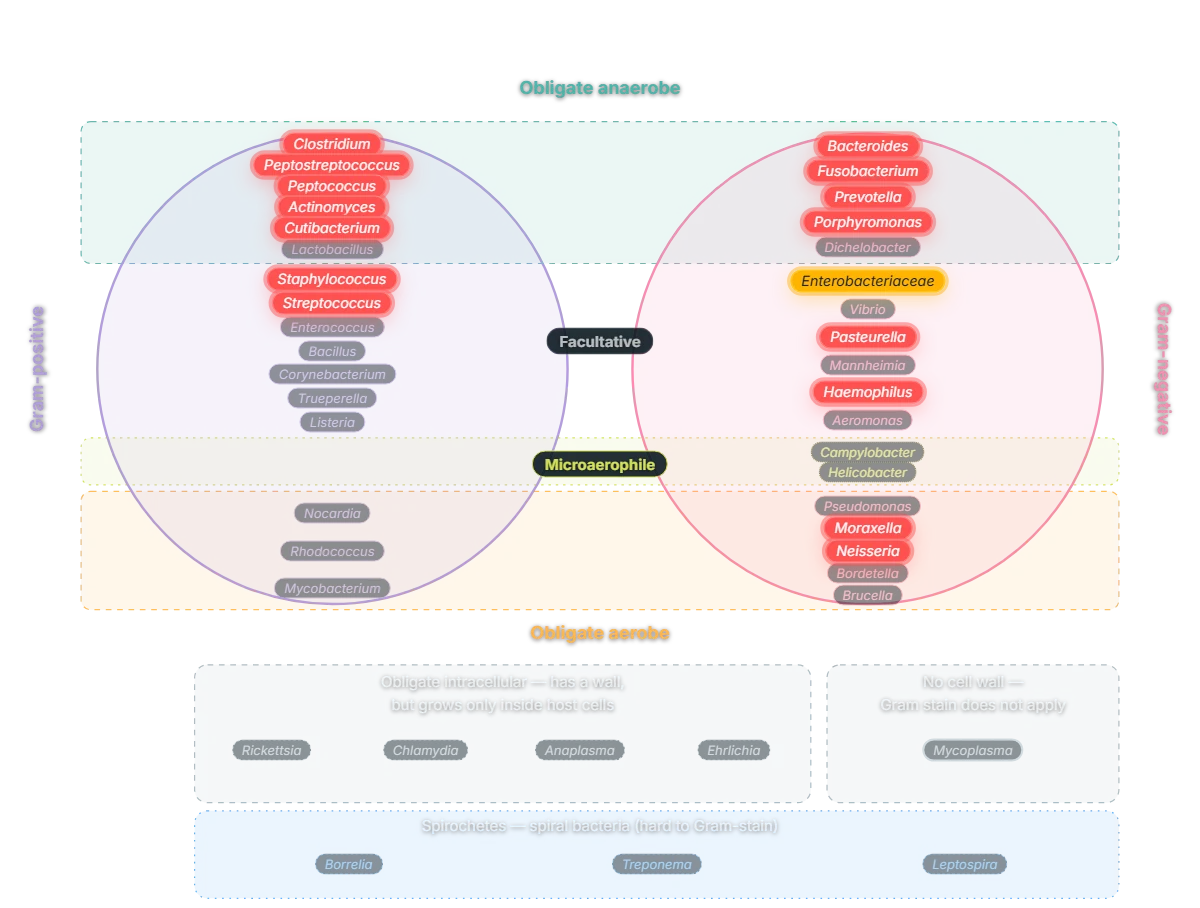
A bactericidal carbapenem active against many methicillin-susceptible Gram-positive organisms, Enterobacterales and anaerobes, including Bacteroides fragilis. It is stable to many beta-lactamases and many ESBLs, but isolate susceptibility and carbapenemase production remain decisive. Unlike imipenem and meropenem, ertapenem has no reliable activity against Pseudomonas aeruginosa, Acinetobacter or Enterococcus. It is also inactive against MRSA/MRSP, Stenotrophomonas, cell-wall-free bacteria and intracellular pathogens.
Open the full-size spectrum image
Veterinary uses and doses
Documented severe multidrug-resistant infection — dog
Clinical note: Dog-specific evidence is limited to formulary references; no robust clinical trial of this regimen was found. Use only after culture and susceptibility testing, when no effective lower-tier option remains, with close monitoring.
Documented severe multidrug-resistant infection — cat
Clinical note: Cat-specific evidence is limited to formulary references; no robust clinical trial of this regimen was found. Use only after culture and susceptibility testing and when no effective lower-tier option remains.
Clinical note: SC use is extra-label and cat-specific evidence is limited to formulary references. Monitor the injection site and reassess the need for continued treatment frequently.
Dosage forms
Ertapenem vial 1000 mg (1 g)
Safety and clinical notes
⛔ Human-reserve carbapenem: do not use empirically. Consider it only for a severe, documented multidrug-resistant infection after culture and susceptibility testing, preferably with specialist or microbiology input.
Evidence for dosing in dogs and cats is limited: these are formulary regimens, not regimens validated in a clinical trial. MIC, infection site, source control and response must guide treatment.
Ertapenem has no reliable activity against Pseudomonas, Acinetobacter or Enterococcus; do not select it for these organisms.
Because elimination is renal and protein binding is high, review the regimen carefully in renal impairment, marked hypoalbuminaemia, CNS disease or a seizure history.
Avoid concomitant valproate/valproic acid: a marked fall in valproate concentration may compromise seizure control.
For IV use, reconstitute with 10 mL, transfer to normal saline and infuse over about 30 minutes; do not use a dextrose-containing IV diluent. Veterinary SC use is extra-label and requires injection-site monitoring.