Injectable glycopeptide and cell-wall synthesis inhibitor · bactericidal against most susceptible organisms and usually bacteriostatic against enterococci
Species: Dogs & Cats1 dose protocol2 dosage forms
This page is a calculation and educational reference for veterinarians and veterinary students. It does not replace examination, culture and susceptibility testing, clinical judgment, or the attending veterinarian's final decision.
Drug overview
Injectable glycopeptide and cell-wall synthesis inhibitor · bactericidal against most susceptible organisms and usually bacteriostatic against enterococci
Brand names: Vancocin® / Vanco® / Vancomax®
Reserve-drug dose calculation only: 15 mg/kg IV every 6–8 h; infuse over at least 60 minutes and at no more than 10 mg/minSource: DeStefano et al. 2019 / OSU VMC Antimicrobial Use Guidelines
Spectrum of activity
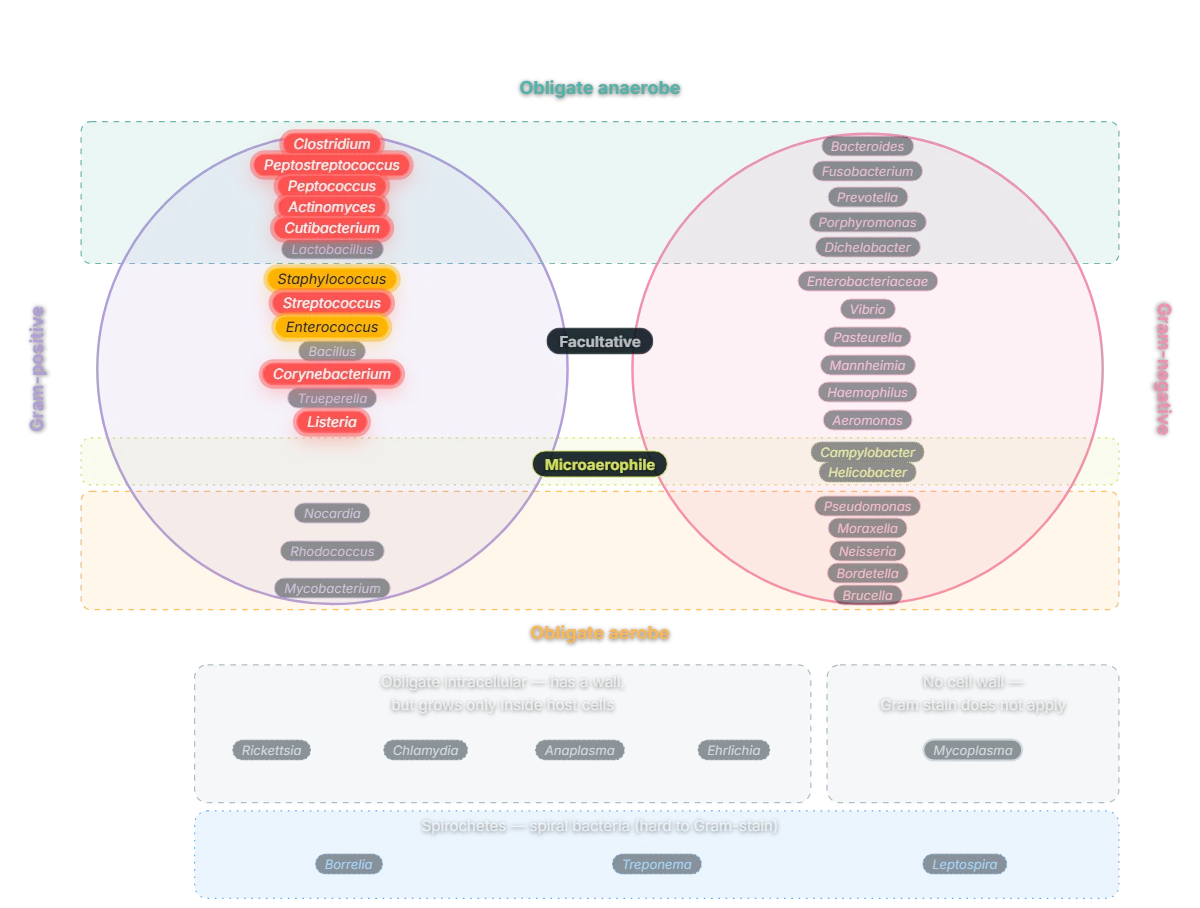
Vancomycin is a glycopeptide with a spectrum restricted to Gram-positive bacteria. It is active against many streptococci, susceptible staphylococci, selected enterococci, Corynebacterium, Listeria, Actinomyces, and several Gram-positive anaerobes. Staphylococcus and Enterococcus are shown as susceptibility-dependent because reduced-susceptibility strains and vancomycin-resistant enterococci occur, and clinical use of this reserve drug should be based on culture and AST. It has no reliable activity against Gram-negative bacteria, mycoplasmas, or intracellular pathogens. Its action is bactericidal against most susceptible organisms but is usually bacteriostatic against enterococci.
Open the full-size spectrum image
Veterinary uses and doses
Life-threatening systemic infection caused by a multidrug-resistant Gram-positive organism
Dogs & CatsSource: DeStefano et al. 2019 / Plumb's Veterinary Drug Handbook
15 mg/kg IV · every 6–8 h · infuse over at least 60 minutes and at no more than 10 mg/min
Clinical note: Use only for a susceptible Gram-positive isolate after culture and susceptibility testing, when no effective lower-tier option remains. This was the most common starting regimen in the clinical series of dogs and cats, but feline pharmacokinetic data and a validated feline drug-monitoring target are lacking. Renal function, hydration, infection site, and the patient's response must guide ongoing treatment.
Dosage forms
Vancomycin vial 500 mg
Vancomycin vial 1000 mg (1 g)
Safety and clinical notes
⛔ Human-reserve glycopeptide: empiric or routine use is not justified. Reserve it for a life-threatening systemic infection caused by a susceptible multidrug-resistant Gram-positive organism after culture and susceptibility testing, when no effective lower-tier option remains, preferably with antimicrobial-stewardship or specialist approval.
For systemic infection, use the IV route only. Rapid bolus, IM, SC, or intraperitoneal administration can cause a severe reaction or tissue injury. Infuse each dose over at least 60 minutes and at no more than 10 mg/min; if the rate limit requires longer, use the longer infusion time.
Assess renal function, urine output, and hydration before and during treatment, and individualize the regimen in renal impairment. Where available, consider serum drug monitoring, particularly in critical illness, prolonged treatment, unstable renal function, or concurrent nephrotoxic therapy. Human AUC or trough targets should not be carried over to dogs or cats without veterinary validation.
Infusion-related flushing, hypotension and phlebitis, nephrotoxicity, ototoxicity, and neutropenia during prolonged treatment can occur. Combine with aminoglycosides, amphotericin B, cisplatin, or other nephrotoxic/ototoxic drugs only for a clear indication and with intensified monitoring.
Reconstitute the vial according to that product's instructions, then dilute it in a compatible fluid to a final infusion concentration no greater than 5 mg/mL. Check compatibility with other drugs and solutions and use a separate line when required.
Older oral-vancomycin regimens for Clostridioides difficile in dogs and cats are not included in this calculator because clinical evidence is insufficient and resistance is a major concern. Detection of the organism or its toxin, without compatible clinical disease and exclusion of other causes of diarrhea, is not enough to justify this reserve drug.
Cited sources
DeStefano et al. 2019 / OSU VMC Antimicrobial Use Guidelines
DeStefano et al. 2019 / Plumb's Veterinary Drug Handbook