Species: Dogs & Cats11 dose protocols4 dosage forms
This page is a calculation and educational reference for veterinarians and veterinary students. It does not replace examination, culture and susceptibility testing, clinical judgment, or the attending veterinarian's final decision.
General dose: 15 mg/kg PO · every 12 hSource: Plumb's / ISCAID 2019
Spectrum of activity
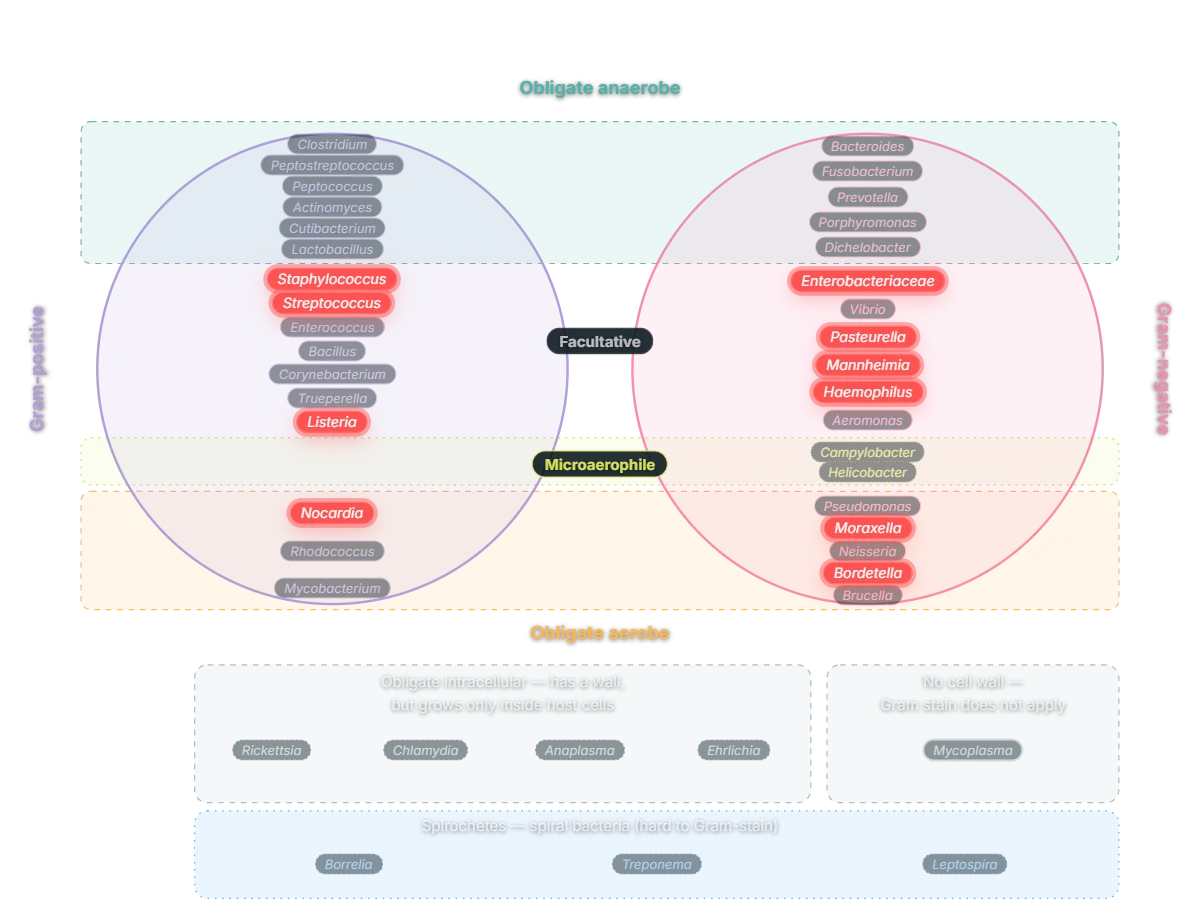
A potentiated, bactericidal sulfonamide; trimethoprim and sulfamethoxazole block two consecutive steps of the folate pathway (synergy, slower resistance). Its strengths are aerobic Gram-positives — staphylococci, streptococci, Listeria and especially Nocardia (drug of choice) — plus Enterobacteriaceae (E. coli, Klebsiella, Proteus, Enterobacter, Salmonella) and respiratory Gram-negative bacilli (Haemophilus, Bordetella, Pasteurella, Moraxella). It also hits several protozoa: Toxoplasma, Neospora and coccidia (Cystoisospora). It is also active against the fungus Pneumocystis. But it has no useful activity against Pseudomonas, anaerobes, enterococci (unreliable), Mycoplasma and intracellular bacteria (Rickettsia/Ehrlichia). Note: resistance in E. coli and staphylococci is rising — culture and sensitivity where possible.
Open the full-size spectrum image
Veterinary uses and doses
Urinary tract infection (UTI)
DogSource: ISCAID 2019
15 mg/kg · every 12 h · 3–5 days
Clinical note: First-line for sporadic bacterial cystitis (with amoxicillin); a short 3–5 day course is enough (ISCAID 2019). With rising E. coli resistance, ideally treat after culture.
CatSource: ISCAID 2019
Cat: 15 mg/kg · every 12 h · 3–5 days
Clinical note: A short 3–5 day course is enough for sporadic cystitis (ISCAID). Note: in cats most lower-urinary signs are idiopathic (FIC) and non-infectious — confirm infection by culture before giving an antibiotic.
Skin & soft tissue
DogSource: Plumb's
Pyoderma/soft tissue: 15–30 mg/kg · every 12 h
Clinical note: A good option for staphylococcal pyoderma. Superficial pyoderma usually 3–4 weeks and deep pyoderma longer; continue about 1 week past clinical cure.
CatSource: Greene 2006
Cat — skin/soft tissue: 15–30 mg/kg · every 12 h · 7–14 days
Systemic / serious infection
DogSource: Greene 2006
Systemic: 30 mg/kg · every 12 h
Clinical note: ⚠️ Active sepsis/bacteremia needs initial intravenous therapy; oral co-trimoxazole is not adequate for a septic patient — this dose is for a stable systemic infection or step-down.
CatSource: Greene 2006
Cat — systemic: 30 mg/kg · every 12 h
Clinical note: ⚠️ Active sepsis needs intravenous therapy; this oral dose is for a stable systemic infection or step-down. In cats, monitor for anorexia, leukopenia and anemia.
Nocardiosis
DogSource: Plumb's
Nocardiosis: 30 mg/kg · every 12 h · weeks to months
Clinical note: Trimethoprim/sulfa is the drug of choice for Nocardia. Treatment is long (often 2–3 months or more) and should continue for a while after full recovery.
Coccidiosis
DogSource: Matz 1995
Coccidiosis: 30 mg/kg · once daily · 10 days
CatSource: Plumb's
Cat — coccidiosis: 30 mg/kg · once daily · 10 days
Toxoplasmosis / protozoal
DogSource: Lappin 2000
Toxoplasmosis: 15 mg/kg · every 12 h · 4 weeks
Combination therapy: For toxoplasmosis/neosporosis it is often combined with clindamycin or pyrimethamine
Toxoplasmosis
CatSource: Lappin 2000
Cat — toxoplasmosis: 15 mg/kg · every 12 h · 4 weeks
Clinical note: For clinical feline toxoplasmosis, clindamycin is first-line; co-trimoxazole is an alternative or adjunct.
Dosage forms
Suspension 240 mg/5 mL (40+200)
Pediatric tablet 120 mg (20+100)
Tablet 480 mg (80+400)
Tablet 960 mg / DS (160+800)
Safety and clinical notes
⚠️ All doses are expressed as the combined trimethoprim + sulfamethoxazole amount; tablet and suspension strengths are also the combined amount (480 = 80+400).
🐶 In dogs it can cause keratoconjunctivitis sicca (KCS), which may be irreversible; monitor tear production on long courses and tell the owner to return if the eyes become dry or irritated.
Hypersensitivity reactions (type I/III: urticaria, fever, facial swelling, polyarthritis) are more common in large breeds and especially Dobermans.
Contraindicated in severe hepatic/renal impairment, blood dyscrasias and a history of sulfonamide sensitivity.
On long-term therapy, monitor CBC and thyroid function (hypothyroidism can occur).
Urinary crystalluria can occur with high or prolonged dosing or acidic/concentrated urine; keep the animal hydrated with free access to water.
No useful activity against Pseudomonas, anaerobes, enterococci (unreliable) and Mycoplasma; E. coli/staph resistance is rising (ideally treat after culture).
In cats, anorexia, leukopenia and anemia can occur. Teratogenicity has been reported; in pregnancy use only when benefit outweighs risk and not near term.