Species: Dogs & Cats9 dose protocols3 dosage forms
This page is a calculation and educational reference for veterinarians and veterinary students. It does not replace examination, culture and susceptibility testing, clinical judgment, or the attending veterinarian's final decision.
General systemic dose: 20–25 mg/kg parenteral · every 8 hSource: Plumb's (general)
Spectrum of activity
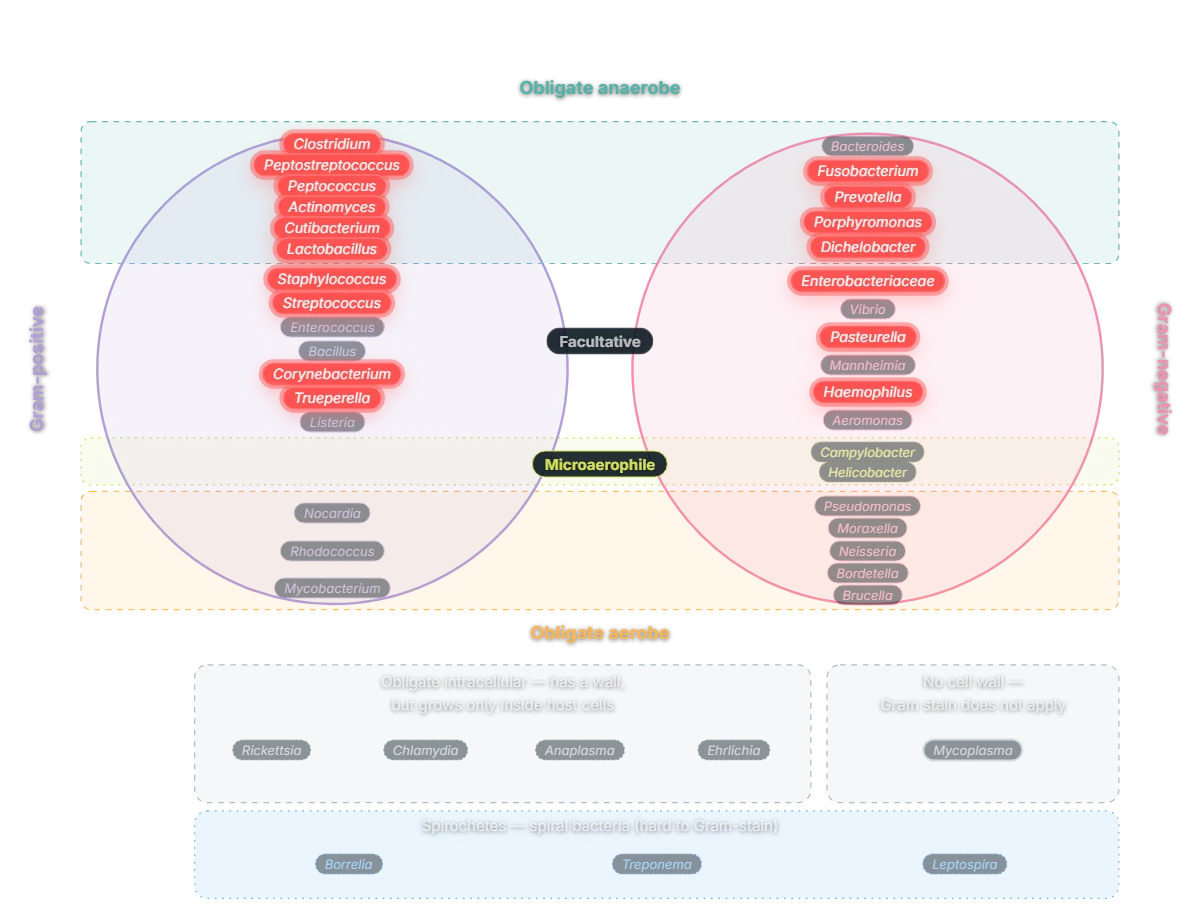
A first-generation, bactericidal cephalosporin that is injectable only (no oral absorption). It has excellent Gram-positive cover and — unlike the penicillins — is active against beta-lactamase-producing staphylococci (S. aureus, S. pseudintermedius) as well as streptococci, Corynebacterium and Trueperella. It covers most anaerobesexcept Bacteroides fragilis, and is active against some susceptible aerobic Gram-negatives (E. coli, Klebsiella, Proteus mirabilis, Pasteurella, Haemophilus). But it is intrinsically inactive against: enterococci, Listeria, MRSA/MRSP, Pseudomonas, Enterobacter, Serratia, Citrobacter, indole-positive Proteus, and cell-wall-free/intracellular bacteria (Mycoplasma, Rickettsia).
Orthopedic surgery, when prophylaxis is indicated: 22–25 mg/kg IV 30–60 min before incision, then every 2 h intra-operatively
Clinical note: Routine surgical antimicrobial prophylaxis is generally not indicated for clean orthopedic surgery without an implant. Consider it for implant procedures or another clearly high-risk setting according to local policy; administer within 30–60 minutes before incision and discontinue at wound closure.
Systemic infection
DogSource: Greene 1998
5–25 mg/kg IM or IV · every 6–8 h
CatSource: Greene 1998
Cat: 33 mg/kg IV or IM · every 8–12 h
CatSource: Lappin 2002
Cat: 20–25 mg/kg IM or IV · every 8 h
Orthopedic infection
DogSource: Greene 1998
22 mg/kg IV, IM or SC · every 6–8 h · up to 7 days
Sepsis / bacteremia
DogSource: Greene 1998 / Hardie 2000
15–25 mg/kg IV, IM or SC · every 4–8 h · up to 7 days
CatSource: Hardie 2000
Cat: 20–25 mg/kg IV · every 4–8 h
Neonatal sepsis
DogSource: Kampschmidt 2006
Neonate: 10–30 mg/kg IV or IO · every 8 h
CatSource: Kampschmidt 2006
Neonatal cat: 10–30 mg/kg IV or IO · every 8 h
Dosage forms
Vial 500 mg
Vial 1000 mg (1 g)
Vial 250 mg
Safety and clinical notes
Cefazolin has no oral absorption and is injectable only (IV/IM/SC); for oral therapy use an oral cephalosporin (e.g. cephalexin).
It is first-generation: excellent Gram-positive cover and — unlike the penicillins — active against beta-lactamase-producing staphylococci; but intrinsically inactive against enterococci, Listeria, MRSA/MRSP, Pseudomonas, Enterobacter, Serratia and Citrobacter.
Active against most anaerobes except Bacteroides fragilis.
IM injection may be painful (less than other cephalosporins); give IV slowly over 3–5 minutes (rapid high-dose injection may cause seizures).
Contraindicated in cephalosporin allergy; cross-reactivity with penicillins and carbapenems is possible.
Dose reduction may be needed in renal impairment; use with caution alongside nephrotoxic drugs (aminoglycosides, amphotericin B).
It is incompatible in one syringe/solution with aminoglycosides (amikacin, kanamycin) and several other drugs; compatible with normal saline, Ringer's and metronidazole.
The reconstituted solution is stable for up to 24 hours at room temperature and up to 96 hours refrigerated (protect from light).
Considered relatively safe in pregnancy (class B); use with caution during lactation (may alter the neonate's gut flora).