Species: Dogs & Cats2 dose protocols2 dosage forms
This page is a calculation and educational reference for veterinarians and veterinary students. It does not replace examination, culture and susceptibility testing, clinical judgment, or the attending veterinarian's final decision.
General dose: 20–50 mg/kg (combined) parenteral · q6–8hSource: Plumb's (general)
Spectrum of activity
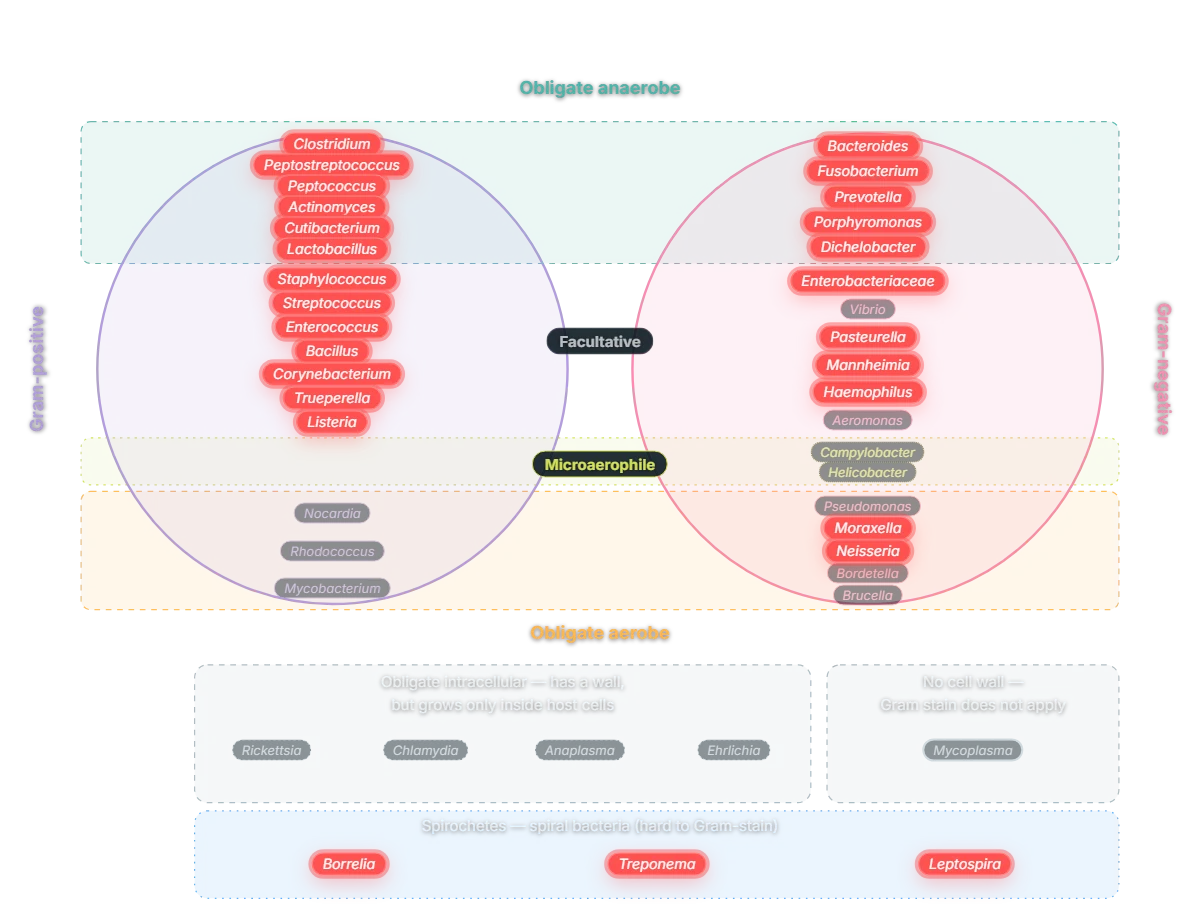
A potentiated aminopenicillin, parenteral only (2:1 ratio). Sulbactam is a beta-lactamase inhibitor that "protects" the beta-lactam ring of ampicillin; so beyond the aminopenicillin spectrum it becomes active against beta-lactamase-producing staphylococci and beta-lactamase-producing strains of E. coli, Klebsiella and Proteus. It covers Gram-positives (streptococci, enterococci, Listeria, Bacillus), most anaerobes (Clostridium, Bacteroides, Fusobacterium, Peptostreptococcus) and some Gram-negatives (Pasteurella, Haemophilus, Moraxella, Neisseria). But it is inactive against Pseudomonas and does not inhibit the type-I (chromosomal) beta-lactamases of Citrobacter, Enterobacter and Serratia.
Open the full-size spectrum image
Veterinary uses and doses
Susceptible infection
Dogs & CatsSource: Greene 2006 / Hawkins 2003
Susceptible infection (incl. respiratory & intra-abdominal): 20–50 mg/kg combined · q6–8h · IV or IM
Clinical note: The dose is combined (ampicillin + sulbactam). Main use is when oral amoxicillin/clavulanate is not viable (NPO/critically ill) or a large parenteral dose is desirable (sepsis, pneumonia). Not effective against Pseudomonas.
Serious bite wounds (adjunctive)
Dogs & CatsSource: Bateman 2005
Serious bite wounds: 30–50 mg/kg combined · q8h · IV
Combination therapy: as adjunctive therapy alongside wound lavage/debridement and supportive care
Dosage forms
Vial 1.5 g (1 g ampicillin + 0.5 g sulbactam)
Vial 3 g (2 g ampicillin + 1 g sulbactam)
Safety and clinical notes
Parenteral only (sulbactam is not orally absorbed); the dose is stated as combined (ampicillin + sulbactam). For oral therapy use amoxicillin/clavulanate.
Contraindicated in severe penicillin hypersensitivity (anaphylaxis); because of cross-reactivity, use with caution in patients hypersensitive to other beta-lactams (cephalosporins, carbapenems).
IM injection is painful (may be reconstituted with 0.5–2% lidocaine); give IV slowly — a slow push over 3–5 minutes, or a short infusion over 15–30 minutes if diluted (rapid injection risks thrombophlebitis).
Incompatible with aminoglycosides in the same syringe/line (mutual inactivation) — give separately. Compatible with vancomycin (at stated concentrations).
In severe renal dysfunction, lengthen the dosing interval. High/prolonged doses rarely cause neurotoxicity (ataxia in dogs); may cause a false-positive urine glucose.
Reconstitution/stability: 45 mg/mL is stable 8 h at room temperature and 48 h refrigerated; 30 mg/mL is stable 72 h refrigerated; use the IM solution within 1 hour. Store the powder below 30°C.
Because of the frequent (q6–8h) dosing intervals it is best suited to inpatients; switch to an oral form (amoxicillin/clavulanate) for outpatient continuation.
In pregnancy ampicillin is considered relatively safe (FDA category B; Papich canine/feline class A); sulbactam safety in pregnancy is not established, but both are compatible with breastfeeding.